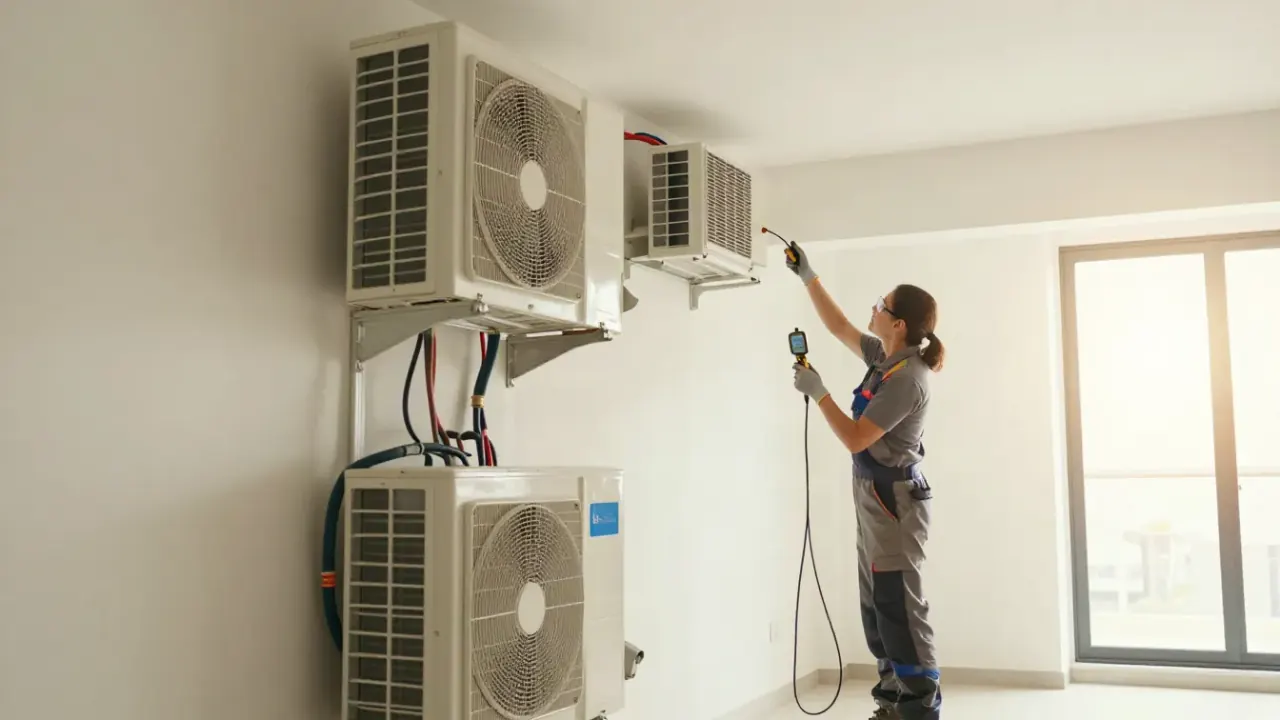
Getting the Most Efficiency from a Multi-Zone Mini Split in Texas
Multi-zone mini splits can cut cooling costs 25-40% in Texas homes. Here are the settings, maintenance intervals, and habits that actually deliver those savings in Rosenberg.
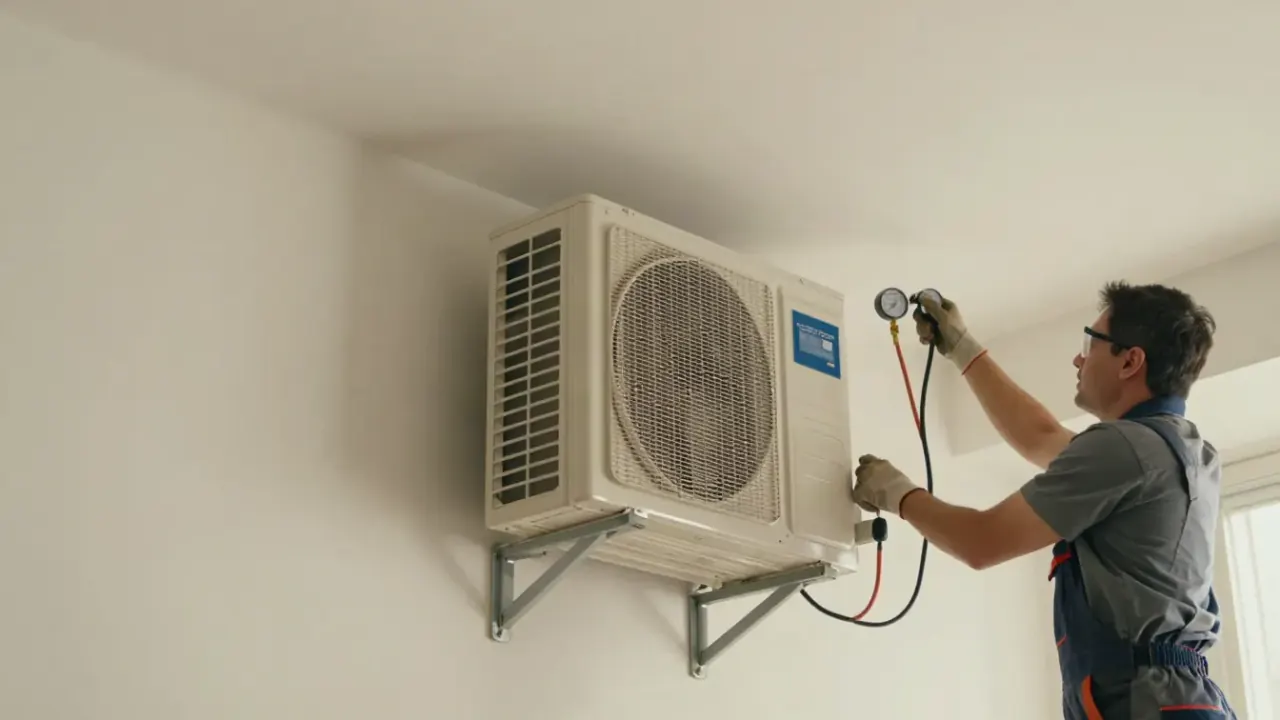
Getting the most efficiency from a multi-zone mini split in Texas means running each indoor head at a steady 75-78°F, keeping every filter clean, and never shutting off zones you plan to cool again within a few hours. That combination alone cuts cooling costs 25-40% compared to a single central system in the same square footage. The rest of this post covers the specific settings, maintenance intervals, and habits that make the difference in Rosenberg and the surrounding Fort Bend County neighborhoods.
Multi-zone mini splits are popular here for good reason. They let you cool a home office without paying to chill three empty bedrooms, and they sidestep the duct losses that plague older ranch homes. But the efficiency gains only show up on your electric bill when the system is set up and maintained correctly. A poorly managed multi-zone setup can perform worse than the central AC it replaced.
Why Texas Heat Punishes Multi-Zone Systems
Texas heat punishes multi-zone mini splits because the outdoor condenser works harder and longer than it would in a milder climate, and every degree of extra runtime compounds across three, four, or five indoor heads. Rosenberg sits in a cooling-dominated climate with roughly 4,000 cooling degree days per year. That is more than double what a home in the Pacific Northwest sees.
When the outdoor unit is sized correctly, it can modulate down to about 30% of its rated capacity and hold there. That low-and-slow operation is where the efficiency lives. When a zone is oversized, or when the system is asked to cool a hot room from scratch, the compressor jumps to full output and stays there. Full output burns roughly three times the wattage of a modulated load.
The other Texas-specific factor is humidity. Our summer dew points sit between 72 and 76°F for months. A mini split has to remove moisture before it can drop the air temperature, and that latent load adds 20-30% to the work the system does. Oversized zones short-cycle, which means they never run long enough to pull humidity out of the air. You end up with a room that feels clammy at 74°F.
We see this constantly in the newer subdivisions west of town. A homeowner adds a fourth head to a system that was sized for three, and now nothing dehumidifies properly. If your system is already struggling, Multi-Zone Mini Split Repair Rosenberg TX is usually the fastest path back to proper operation.
The Settings That Actually Save Money
The settings that actually save money on a multi-zone mini split are steady setpoints, dry mode during humid stretches, and fan speeds matched to the room rather than the remote's default. Most homeowners leave the remote on whatever it was set to on day one. That is almost never the efficient configuration.
Setpoint strategy
Set every occupied zone to 75-78°F. The Department of Energy recommends 78°F for cooling in humid climates, and each degree above 72°F saves roughly 3% on cooling costs. Going from 72°F to 77°F across a four-zone system in a 2,200-square-foot Rosenberg home saves about $40-55 per month during July and August at current retail electric rates.
Do not set zones to 68°F thinking the room will cool faster. It will not. The system cools at the same rate regardless of setpoint; you just run longer and spend more.
Dry mode in spring and fall
From April through June and again in September and October, Rosenberg humidity stays high while temperatures moderate. Dry mode runs the indoor fan at low speed and lets the coil stay cold longer, which strips more moisture per pass. It uses slightly more energy per hour than cool mode but lets you hold a higher setpoint, so net consumption drops.
Fan speed and louver position
Set the indoor fan to auto, not high. Auto lets the unit ramp down as the room approaches setpoint, which is where the inverter savings come from. Point louvers horizontally in summer. Cold air sinks, so a horizontal throw pushes it across the ceiling and down the far wall instead of dumping it straight onto whoever is sitting below.
Schedule, don't shut off
If you leave for work at 8 a.m., set the bedroom zones to 80°F rather than off. Bringing a room back from 80°F takes about 20 minutes. Bringing it back from 92°F takes over an hour at full compressor output. That hour costs more than the four hours you saved by shutting the system down.
Zone Management: The Biggest Efficiency Lever
Zone management is the biggest efficiency lever on a multi-zone system because a mini split's outdoor unit only modulates down when the total connected load drops. Every zone you keep running adds to that load, even if nobody is in the room.
Here is the practical rule we give homeowners: close off zones that will be empty for more than four hours. Leave zones on if they will be reoccupied within that window. A guest bedroom that sits empty 28 days a month should be off. A home office that you use every weekday should stay on a schedule.
Two things to watch. First, do not close more than half the zones on a system at once. Most multi-zone condensers have a minimum connected capacity, usually around 50% of rated output. Run below that and the compressor short-cycles, which is hard on the unit and terrible for efficiency.
Second, do not rely on the indoor head's occupancy sensor if your unit has one. Those sensors are conservative and often keep a zone running for 30 minutes after the room empties. Manual scheduling through the app or remote is more reliable.
If you are in one of the newer master-planned communities, the zone layout matters more than you might think. Homes in Mini Split Repair in Briarwood Crossing often have four or five heads serving rooms with very different solar exposure, and the west-facing zones carry most of the load from 3 p.m. onward.
Maintenance That Pays for Itself
Maintenance that pays for itself on a multi-zone mini split means cleaning filters every two to four weeks, washing the indoor coils once a year, and having the outdoor condenser coil and refrigerant charge checked every spring. Skipping any of these costs more than the service call.
A clogged filter is the single most common efficiency killer we find. A filter loaded with dust and pet hair restricts airflow by 30-50%, which drops the coil temperature, triggers frost formation, and forces the compressor to run longer for the same cooling. In a four-zone home, dirty filters can add $25-40 per month to your summer bill.
Filter cleaning (every 2-4 weeks in cooling season)
Pull the filter, rinse it under lukewarm water, let it dry completely, and put it back. Do not put a damp filter into the unit. Ten minutes per head, and it is the highest-return maintenance task you can do.
Indoor coil cleaning (annually)
The evaporator coil behind the filter collects a film of dust and biological growth over 12 months. That film insulates the coil and reduces heat transfer. A professional coil cleaning restores 5-10% of lost capacity. We handle this as part of Mini Split Cleaning and Maintenance Rosenberg TX.
Outdoor condenser and charge check (every spring)
The outdoor coil on a Texas mini split gets packed with grass clippings, cottonwood fluff, and pollen. Rinse it from the inside out with a garden hose. Then have a technician verify the refrigerant charge. A system that is 10% low on charge loses about 20% of its capacity and runs 15% longer to hit setpoint.
Condensate drain check (twice a year)
Each indoor head has a drain line that carries condensate outside. In our humidity, those lines grow biofilm fast. A partially clogged line causes water to back up into the wall or drip down the interior. Flush each line with a cup of distilled vinegar every six months. If you already see water where it should not be, that is a Mini Split Water Leak and Condensate Drain Line Repair Rosenberg TX issue and it gets worse quickly.
How Much Can You Actually Save in Rosenberg?
Multi-zone mini splits save money in Texas when they replace a central system with leaky ducts or when they let you stop cooling rooms you do not use. The savings come from three places: no duct losses, zone-by-zone control, and inverter modulation.
Duct losses are the biggest single factor. The DOE estimates that a typical home loses 20-30% of the air its central system produces through leaks, conduction, and poor duct design. In an older Rosenberg home with attic-run flex duct, that number is often closer to 30%. A ductless system delivers 100% of its cooling into the room.
Here is a realistic 2026 cost picture for a 2,200-square-foot Rosenberg home with a four-zone mini split:
- Central AC at 76°F, June through September: roughly $260-320 per month
- Four-zone mini split at 76°F, same period: roughly $165-215 per month
- Annual savings: $400-500
Those numbers assume the filters stay clean and the zones are managed. A neglected four-zone system can easily land back at central-AC costs.
Installation quality matters just as much. A system that is not properly evacuated before charging, or that has a kinked line set, will never hit its rated efficiency. If you are still deciding on equipment, our team handles Mini Split Installation Rosenberg TX with a nitrogen pressure test and a documented vacuum hold on every job.
Common Mistakes That Kill Multi-Zone Efficiency
Common mistakes that kill multi-zone efficiency are almost always operational, not mechanical. We see the same handful of problems across Fort Bend County every summer.
- Setting every zone to 68°F. The system runs at full output for hours and never modulates. You pay for the coldest house on the block.
- Shutting zones off completely during the day. Recovery from 92°F costs more than the hours you saved. Use 80-82°F as a setback instead.
- Closing more than half the zones. The condenser short-cycles, humidity climbs, and the compressor wears faster.
- Ignoring filters for a month or more. Airflow drops, coils frost, and efficiency falls off a cliff.
- Blocking the return air path. Furniture, curtains, or a bed pushed against the head starves the unit for return air and drops capacity by 15-20%.
- Never cleaning the outdoor coil. A matted condenser coil raises head pressure and forces the compressor to work harder for every degree of cooling.
- Running the system with a known refrigerant leak. Low charge means long runtimes and eventual compressor failure. A slow leak is a Refrigerant Leak Repair and Recharge Rosenberg TX job, not something to top off and forget.
One more that catches people off guard: leaving a zone on in a room with the windows open. It sounds obvious, but during the spring and fall shoulder seasons, we find it in about one out of every eight homes we service.
When to Call a Professional
Call a professional when your multi-zone mini split runs more than 20 minutes to drop a room 2°F, when one zone blows noticeably warmer than the others, or when you see ice on an indoor coil. Those three symptoms point to a refrigerant, airflow, or compressor problem that no setting change will fix.
We also get called when a system throws an error code the homeowner cannot clear, or when a zone stops responding to the remote entirely. Those are usually quick diagnostics, but they need a technician with the right gauges and a manufacturer-specific code list.
Our team at Rosenberg Mini Split Repair works on every major brand and handles the full range of ductless problems, from a single head that will not cool to a full multi-zone system that has lost charge. We diagnose first, tell you what it will cost before we start, and get the system back to the efficiency it was rated for.
Frequently Asked Questions
How can I get the most efficiency from my multi-zone mini split in Rosenberg TX?
Set every occupied zone to 75-78°F, clean filters every 2-4 weeks, and leave empty zones off for more than four hours. Have the coils cleaned and the refrigerant charge verified each spring. That combination delivers the full 25-40% savings a multi-zone system is capable of in our climate.
Do multi-zone mini splits save money in Texas?
Yes. A four-zone system in a 2,200-square-foot Rosenberg home typically runs $165-215 per month in summer versus $260-320 for central AC, saving $400-500 per year. The savings come from eliminating duct losses and cooling only the rooms you use.
What settings maximize multi-zone mini split efficiency in Rosenberg?
Cool mode at 75-78°F, fan on auto, louvers horizontal, and dry mode during the humid spring and fall months. Use 80-82°F setbacks instead of shutting zones off. Never set a zone below 72°F; it does not cool faster and it costs significantly more.
How often should I service a multi-zone mini split in Rosenberg TX?
Clean the filters every 2-4 weeks during cooling season, flush the condensate lines every six months, and schedule a professional coil cleaning and charge check once a year in spring. Systems in homes with pets or heavy pollen exposure benefit from a second coil cleaning in the fall.
Why is one zone on my multi-zone system not cooling as well as the others?
A single weak zone usually points to a restricted filter, a kinked or leaking line set, or a failing electronic expansion valve at that head. It is rarely a problem with the outdoor condenser. A technician can isolate the issue with pressure and temperature readings at the indoor unit.
Get Help with Mini Split Repair in Rosenberg
If your multi-zone system is running long, blowing warm, or costing more than it should, we can find out why and fix it. Call Rosenberg Mini Split Repair at (281) 738-1427 and we will get your ductless system back to the efficiency it was built for.