Focused arrival windows
Useful updates and clear arrival timing.
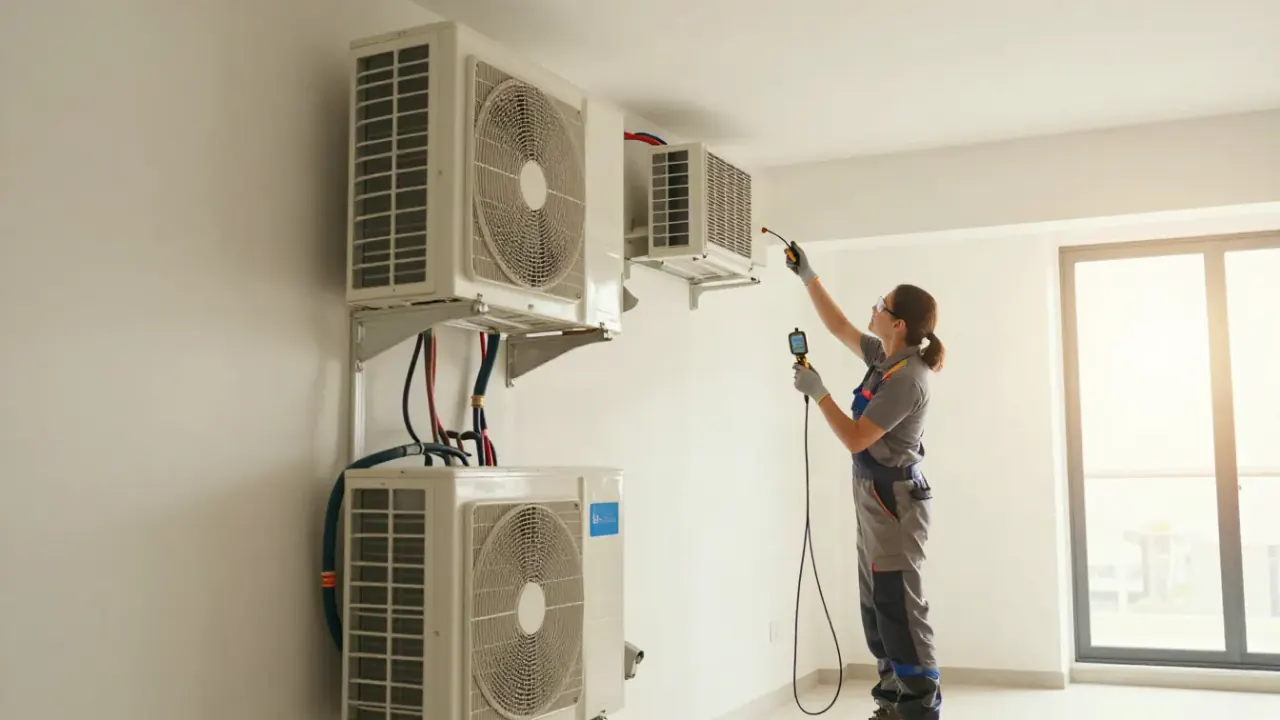
When your Mini Split Not Cooling Repair Rosenberg TX issue hits in the middle of a Texas heat wave, you need a crew that shows up and fixes it right. We diagnose ductless AC not cooling repair in Rosenberg, Texas for homeowners in Fort Bend County, from refrigerant leaks to frozen coils. Call (281) 738-1427 and we will get your cold air back.
Useful updates and clear arrival timing.
Review the approach and price before deciding.
Equipped vehicles and respectful cleanup.
Neighbors serving neighbors with follow-through.
Every call includes a full diagnostic, a clear explanation of the fault, and a price before work begins. Here is what is covered in a standard mini split not cooling repair visit, and what we handle as an add-on when the diagnosis calls for it.
We test refrigerant pressure with a manifold gauge set, check compressor and fan amp draw with a clamp meter, inspect the coil for ice, and verify thermostat and remote communication. This takes about 30 minutes and identifies the root cause.
Using an electronic leak detector and nitrogen pressure testing, we locate leaks at flare fittings, Schrader valves, or coil joints. We repair the leak, then pull a deep vacuum with a vacuum pump and micron gauge before recharging.
A dirty evaporator coil restricts airflow and causes freezing. We clean the coil with coil cleaner, flush the condensate drain line, and add drain pan tablets to prevent algae growth. This restores airflow and stops water leaks.
We test capacitors, control boards, and sensors. A weak capacitor is one of the most common reasons a ductless system will not cool, and replacing it is a fast, affordable fix that restores full compressor operation.
If charge is low, we weigh in R-410A or R-32 to the exact amount on the nameplate. Overcharging or undercharging causes poor cooling and compressor stress, so we do it by weight, not by guesswork.
We run the system for at least 20 minutes and measure the temperature split between return and supply air. A 15 to 20 degree drop confirms the repair worked. We walk you through what failed and how to prevent a repeat.
Share what is happening and receive a clear next step from the local team.
Mini Split Not Cooling Repair Rosenberg TX is a diagnostic and mechanical service that finds why a ductless system stopped producing cold air and restores it, whether the fault is a refrigerant leak, a failed capacitor, or a clogged condensate drain line. A mini split has four core parts: the outdoor condenser, the indoor air handler, the refrigerant line set, and the control board. When any one of them fails, the unit blows warm air. We test each component with a manifold gauge set and clamp meter, then repair the actual cause instead of guessing.
Rosenberg summers push ductless systems hard. From May through September, outdoor units run 12 to 16 hours a day, and that constant load exposes weak capacitors, slow refrigerant leaks, and dirty coils. If you searched for ductless AC not cooling near me, you are likely seeing warm air, ice on the indoor coil, or an error code flashing on the remote. We handle Rosenberg TX mini split cooling problem repair across 77471 and 77469, and we can usually tell you the cause within the first 30 minutes on site.
We ask what the unit is doing: warm air, ice, water on the floor, or an error code. That five-minute conversation tells us whether to bring recovery equipment, a vacuum pump, or a replacement capacitor. You get a realistic arrival window, usually within a few hours for emergency mini split not cooling repair Rosenberg TX calls.
The technician inspects the indoor air handler and outdoor condenser, checks the air filter, and looks for ice buildup or oil traces at the flare fittings. This walkthrough takes about 15 minutes and often narrows the fault to two or three possibilities before any instrument comes out of the bag.
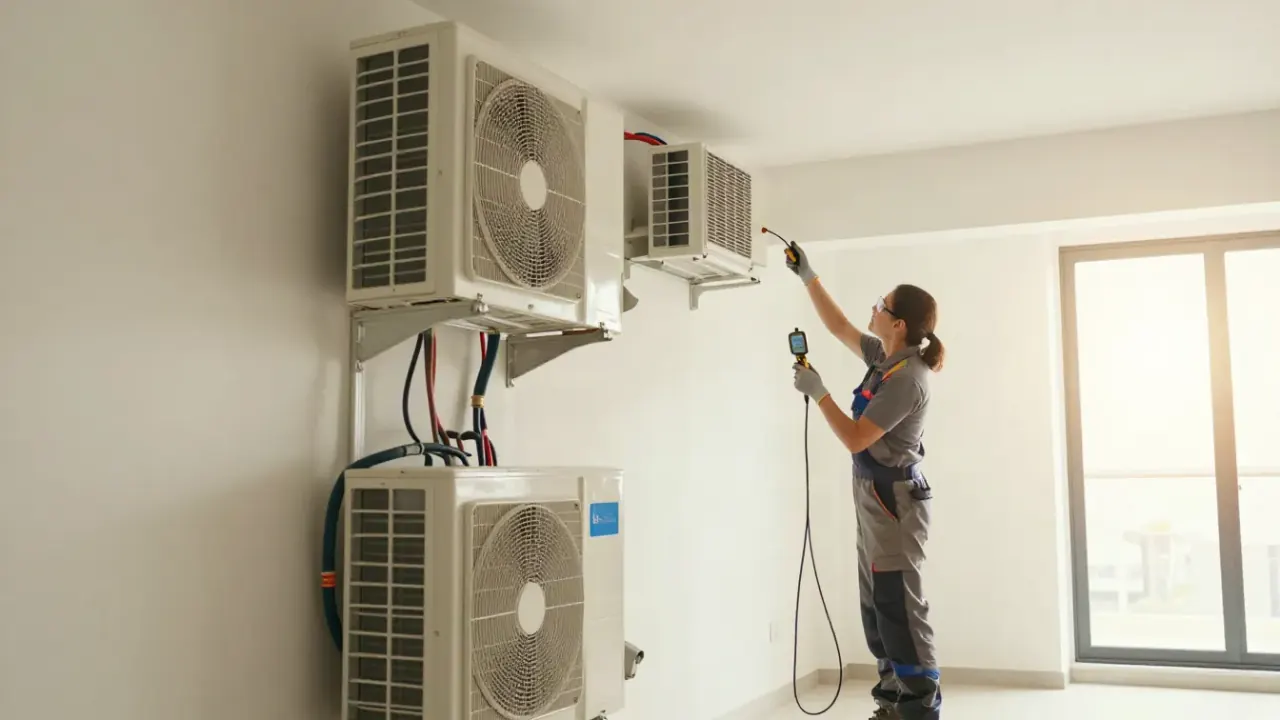
We connect a manifold gauge set to read suction and head pressure, then use a clamp meter to check amp draw at the compressor and fan motor. A micron gauge confirms whether the system holds a deep vacuum. These readings separate a refrigerant problem from an electrical one in minutes.
Once we identify the cause, we repair it: replace the capacitor, seal and re-flare a leaking joint, clear the drain line, or recover and recharge with R-410A or R-32 to the exact weight on the nameplate. Most repairs take one to three hours depending on parts and access.
We run the system for at least 20 minutes and measure supply air temperature, targeting a 15 to 20 degree drop from return air. Then we walk you through what failed, what we did, and how to keep it running. You get a warranty on the repair and our number if anything changes.
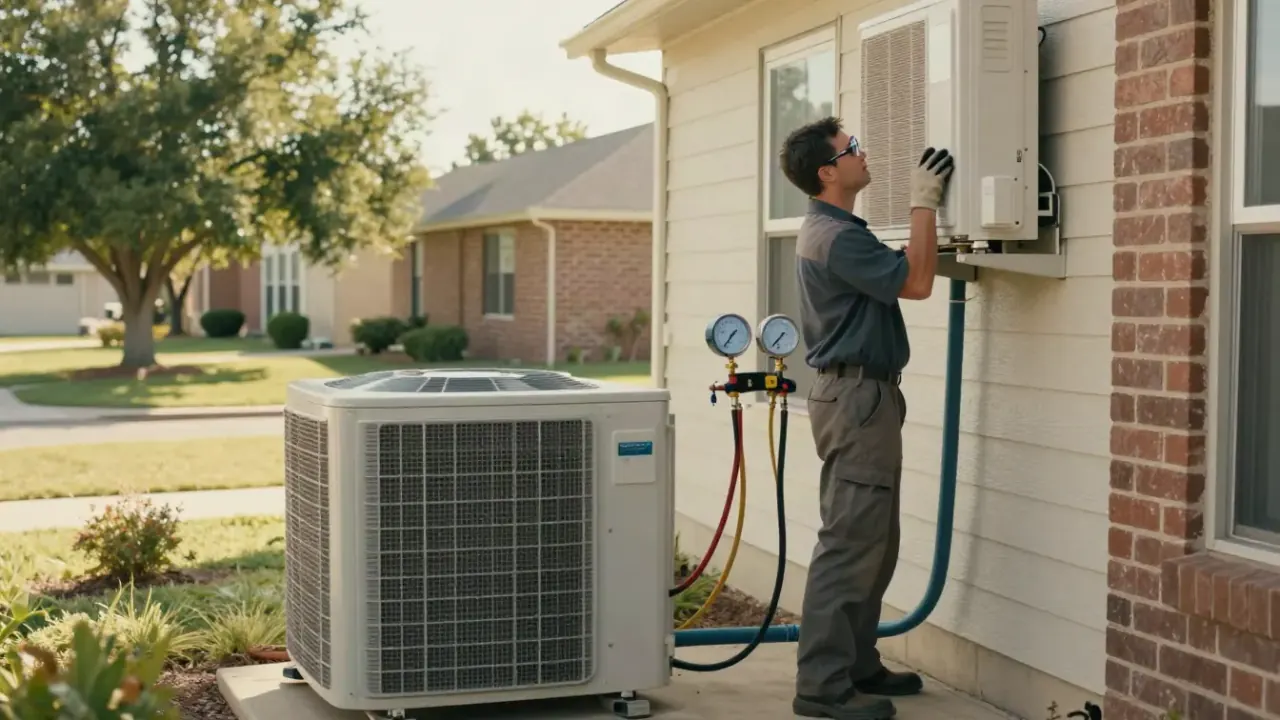
Reads suction and head pressure to determine whether the system is low on charge, overcharged, or has a restriction in the line set.
Pulls a deep vacuum after a leak repair and confirms moisture and air are removed before recharge. We target 500 microns or lower.
Sniffs out refrigerant leaks at flare fittings, Schrader valves, and coil joints that visual inspection alone would miss.
Measures amp draw at the compressor and fan motors to confirm they are running within nameplate spec or failing.
Recovers R-410A or R-32 safely before repairs, keeping us compliant with EPA Section 608 rules and preventing venting.
Pressurizes the system with dry nitrogen for leak testing without introducing moisture into the refrigerant circuit.
Straightens bent coil fins and pushes coil cleaner through the evaporator to restore airflow and heat exchange.
All refrigerant work follows EPA Section 608 rules for recovery, recycling, and recharge. This protects the environment and ensures your system is charged legally and accurately by weight.
After a leak repair, we pressurize the line set with dry nitrogen and watch the gauge for 15 to 30 minutes. A steady reading confirms the repair holds before we recharge.
We pull a vacuum to 500 microns or lower and hold it. This removes moisture that would otherwise form acid and damage the compressor over time.
These calculations confirm the system has the correct charge for its operating conditions, not just a pressure reading that looks close enough.
We measure return and supply air temperature after the repair. A 15 to 20 degree drop confirms the system is cooling as designed before we leave.
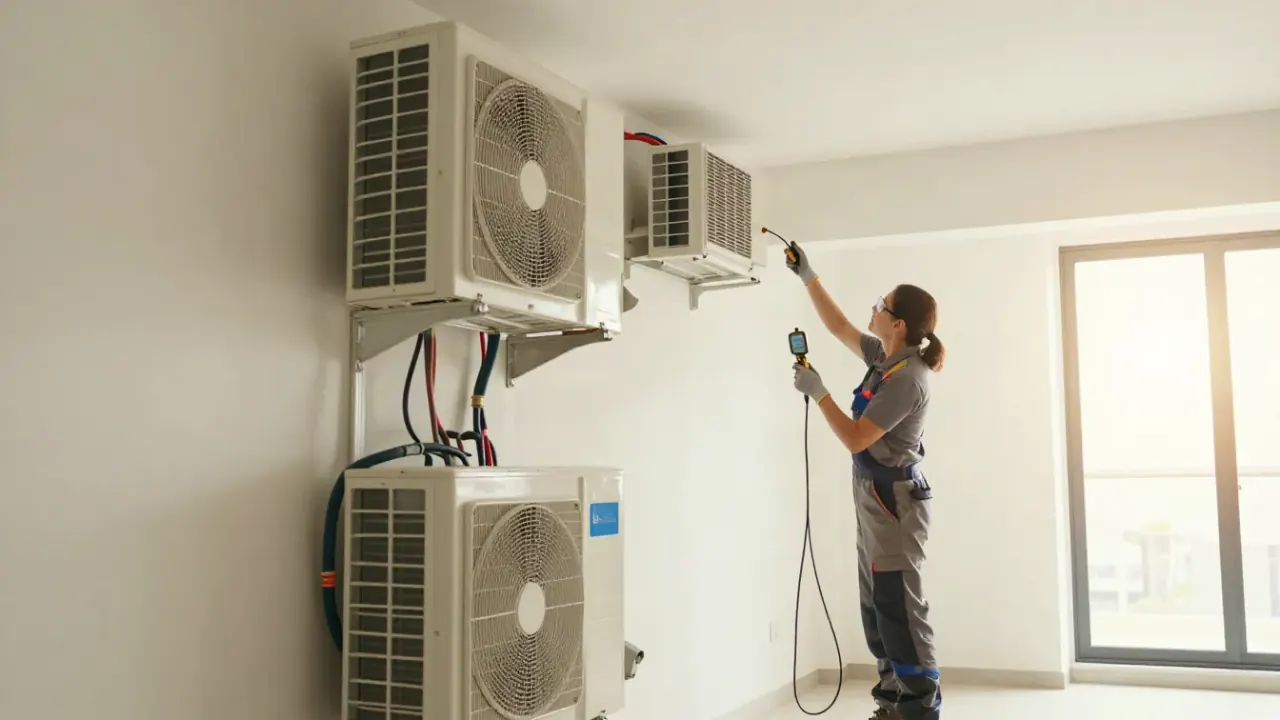
We treat this as a priority call. A technician arrives the same day, runs a full diagnostic, and repairs the fault, whether it is a capacitor, a leak, or a frozen coil. You sleep in a cool room that night instead of waiting days for an appointment.
We isolate the faulty zone, test the indoor unit, zone valve, and branch box wiring, and repair the specific failure without shutting down the rest of the system. All zones cool again, and you avoid a full-system replacement.
Oil traces point to a refrigerant leak. We confirm with an electronic leak detector, repair the joint, pressure test with nitrogen, and recharge by weight. The leak is fixed at the source, so you are not paying for a top-off that fails again next month.
We provide a same-week diagnostic and repair, document the work, and verify the temperature split so the system passes re-inspection. The sale stays on schedule and the buyer has proof the system works.
Rosenberg sits in Fort Bend County, where summer temperatures regularly climb past 95 degrees and the cooling season runs from April into October. That load wears on ductless systems. We see refrigerant leaks at flare fittings, capacitors that fail after three or four hard summers, and coils that freeze because airflow dropped from a dirty filter. Many homes in Briarwood Crossing, Brookewater, and Kingdom Heights have multi-zone systems with three or four indoor heads, and a single zone failure is common. If you are searching for why is my ductless AC not cooling in Rosenberg Texas, the answer is usually one of five things: low charge, a failed capacitor, a frozen coil, a clogged drain line, or a communication fault. We diagnose all five on the first visit. Our trucks carry R-410A, R-32, capacitors, and flare fittings, so most repairs finish the same day. We also follow Fort Bend County code for condensate drainage and electrical connections, which matters when a system is installed or modified.
Newer construction with multi-zone ductless systems. We often find flare fitting leaks and undersized drain lines in these homes.
Established neighborhood with a mix of retrofitted ductless units and older central systems. Coil cleaning and capacitor replacement are common calls here.
Larger homes with three or four indoor heads. When one zone stops cooling, we isolate the branch box or zone valve without disrupting the rest.
Tree-heavy area where pollen and debris clog outdoor condenser coils each spring, reducing cooling capacity and raising head pressure.
Systems run 12 to 16 hours a day for months, accelerating capacitor wear and exposing slow refrigerant leaks that would stay hidden in a milder climate.
Pollen and dust clog condenser and evaporator coils, restricting airflow and causing frozen coils and reduced cooling capacity.
Well-sealed homes hold humidity, so a ductless system that is slightly low on charge struggles more than it would in an older, draftier house.
A homeowner in The Oaks of Rosenberg called because the indoor unit was encased in ice and blowing warm air. The filter had not been changed in over a year, airflow was restricted, and the coil had frozen solid.
We thawed the coil, cleaned it with coil cleaner, replaced the filter, and cleared the condensate drain line. Supply air temperature dropped 18 degrees below return air within 25 minutes of restart.
Maintenance: Change the air filter every 30 to 60 days during cooling season and schedule a coil cleaning each spring. That keeps airflow up and prevents the freeze from returning.
A Briarwood Crossing customer reported warm air and oil residue near the outdoor unit connections. Pressure readings confirmed low charge, and an electronic leak detector pinpointed a leaking flare fitting on the liquid line.
We recovered the remaining refrigerant, re-flared the connection, replaced the fitting, pressure tested with nitrogen, pulled a vacuum to 480 microns, and recharged with R-410A by weight. The system hit a 20 degree temperature split.
Maintenance: Have the flare fittings checked during annual maintenance. A torque wrench set to manufacturer spec prevents over-tightening, which is a common cause of flare leaks.
A Kingdom Heights homeowner called at 9 a.m. because the outdoor unit was humming but the fan was not spinning and the house was getting hot. The clamp meter showed the compressor drawing locked rotor amps.
We tested the dual-run capacitor, confirmed it had failed, and replaced it from stock on the truck. The compressor and fan started immediately, and the system was cooling within 15 minutes of the repair.
Maintenance: Capacitors degrade with heat. An annual amp draw check during spring maintenance catches a weak capacitor before it fails on the hottest day of the year.
Most ductless systems fail in predictable ways. Here are the problems we see most often in Rosenberg and how we fix them for good.
The system runs constantly without cooling, driving up your electric bill while the house stays hot and humid. We check refrigerant charge, compressor operation, and capacitor condition. Low charge points to a leak we can locate and repair. A failed capacitor is a quick replacement. Either way, you get cold air back the same day in most cases.
Ice blocks airflow and insulates the coil, so cooling stops entirely. Meltwater can also drip indoors and damage drywall or flooring. We thaw the coil, clean it with coil cleaner, clear the condensate drain line, and verify charge and airflow. Fixing the underlying cause, usually low charge or restricted airflow, prevents the freeze from returning.
A clogged condensate drain line sends water down your wall or onto the floor, risking mold and structural damage. We flush the drain line, clean the drain pan, and add drain pan tablets to slow algae growth. This is usually a fast repair, often under an hour, and it stops the water immediately.
The system shuts down or runs in a limited mode, and without the code meaning you cannot tell whether it is a sensor, a board, or a communication fault. We read the error code, test the corresponding circuit, and repair the failed component. Our technicians keep current on fault tables for Mitsubishi Electric, Daikin, Fujitsu, LG, Samsung, and other brands.
$180 - $900 depending on scope
Typical 2026 pricing in the Rosenberg area runs $180 to $450 for common repairs like capacitor replacement, coil cleaning, or drain line service. Leak repair with recharge runs $450 to $900 depending on how hard the leak is to reach and how much refrigerant the system holds. Compressor or control board replacement costs more. We diagnose first, then give you a firm price before any work starts. No hidden fees, no pressure. If a repair is not worth the money, we tell you and walk through your options.
A repair costs far less than replacing a ductless system, which runs several thousand dollars installed. Fixing the actual fault restores full cooling and extends the life of equipment you already own. You get a warranty on the repair and a clear explanation of what failed.
A capacitor replacement is a quick, low-cost repair. A refrigerant leak that requires recovery, repair, pressure testing, and recharge takes more time and materials, so it costs more.
R-410A and R-32 are priced differently, and larger multi-zone systems hold more charge. The nameplate tells us the exact weight, so you pay for what the system actually needs.
An indoor head mounted high on a wall or a condenser tucked behind landscaping takes longer to service. Easy access keeps labor time, and your cost, lower.
Common parts like capacitors and flare fittings are on the truck. Special-order control boards or brand-specific sensors add a day or two and may carry a higher part cost.
A well-maintained system with clean coils is faster to diagnose and repair. Heavy ice buildup or years of deferred maintenance adds thawing and cleaning time to the job.
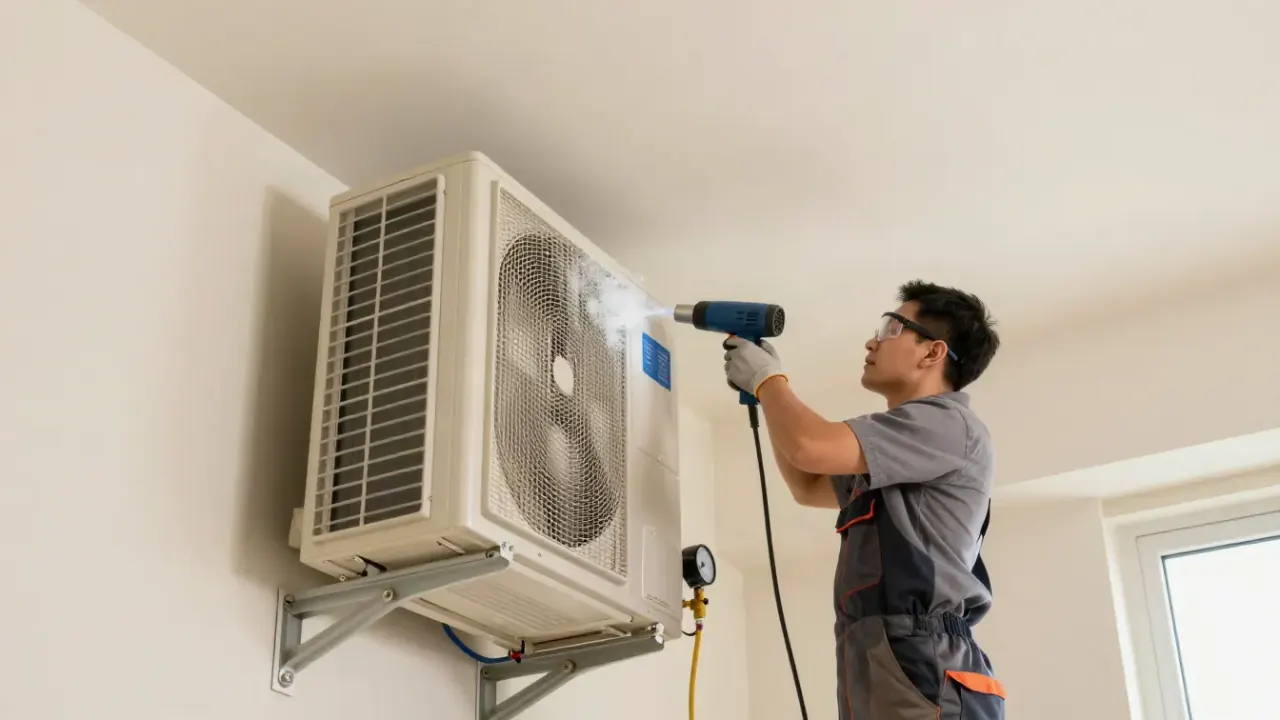
Our technicians hold EPA Section 608 certification for refrigerant handling and NATE certification for HVAC service, and we work under a Texas HVAC contractor license and TDLR license. That matters because refrigerant work is regulated, and an uncertified tech cannot legally recover or charge a system. We follow AHRI certification standards for matching equipment and OSHA safety training on every job. We have diagnosed hundreds of ductless systems across Fort Bend County, from single-zone bedroom units to multi-zone setups with four indoor heads. When a system is not cooling, we know where to look first.
Our bedroom mini split stopped cooling in July and the house was unbearable. They came out the same day, found a refrigerant leak at the flare fitting, repaired it, and recharged the system. Cold air was back by evening. Fair price and they explained everything without trying to sell me a new unit.
The indoor unit was frozen solid and dripping water. The technician thawed it, cleaned the coil, and cleared the drain line. He also showed me the dirty filter that caused the airflow problem. Two months later it is still cooling perfectly. Honest work at a fair price.
I called about my ductless AC not cooling and they diagnosed a failed capacitor in about 20 minutes. Had the part on the truck and finished the repair the same visit. No second trip, no extra charge. I have already recommended them to two neighbors.
The most common causes are low refrigerant from a leak, a dirty or frozen evaporator coil, a failed capacitor, or a clogged condensate drain line that trips a safety switch. In Rosenberg, the long cooling season makes refrigerant leaks and dirty coils especially common. We test pressure, amp draw, and airflow to pinpoint the cause in about 30 minutes.
Typical 2026 pricing in the Rosenberg area runs $180 to $450 for common repairs like a capacitor replacement or coil cleaning, and $450 to $900 when a refrigerant leak repair and recharge is involved. Compressor or control board failures cost more. We give you the price after diagnosis, before any work begins.
Yes, in most cases. We carry common parts and refrigerant on the truck, so same-day mini split not cooling service near me Rosenberg calls are often completed in one visit. Call (281) 738-1427 before noon and we can usually have a technician at your home the same day.
Refrigerant leaks, frozen evaporator coils, failed capacitors, dirty air filters, and communication faults between the remote and indoor unit are the usual suspects. Ice buildup happens when airflow drops or charge runs low. Each cause has a different fix, which is why diagnosis comes before any repair.
Not seeing your question? Our local team can help you understand urgency, scheduling and what to expect.
Ask the local team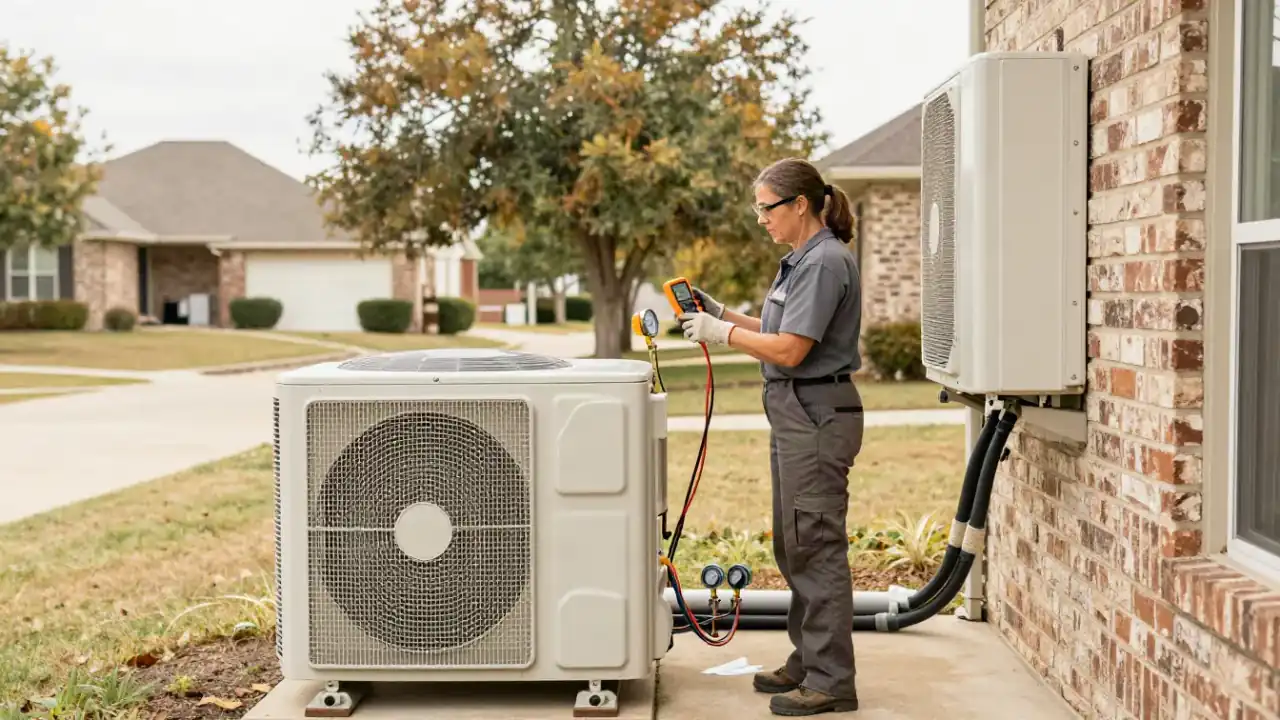
If your ductless system runs but blows cold air in heating mode, the reversing valve or defrost cycle is usually involved. We diagnose both heating and cooling faults on the same visit so you are not booking two separate appointments.
View service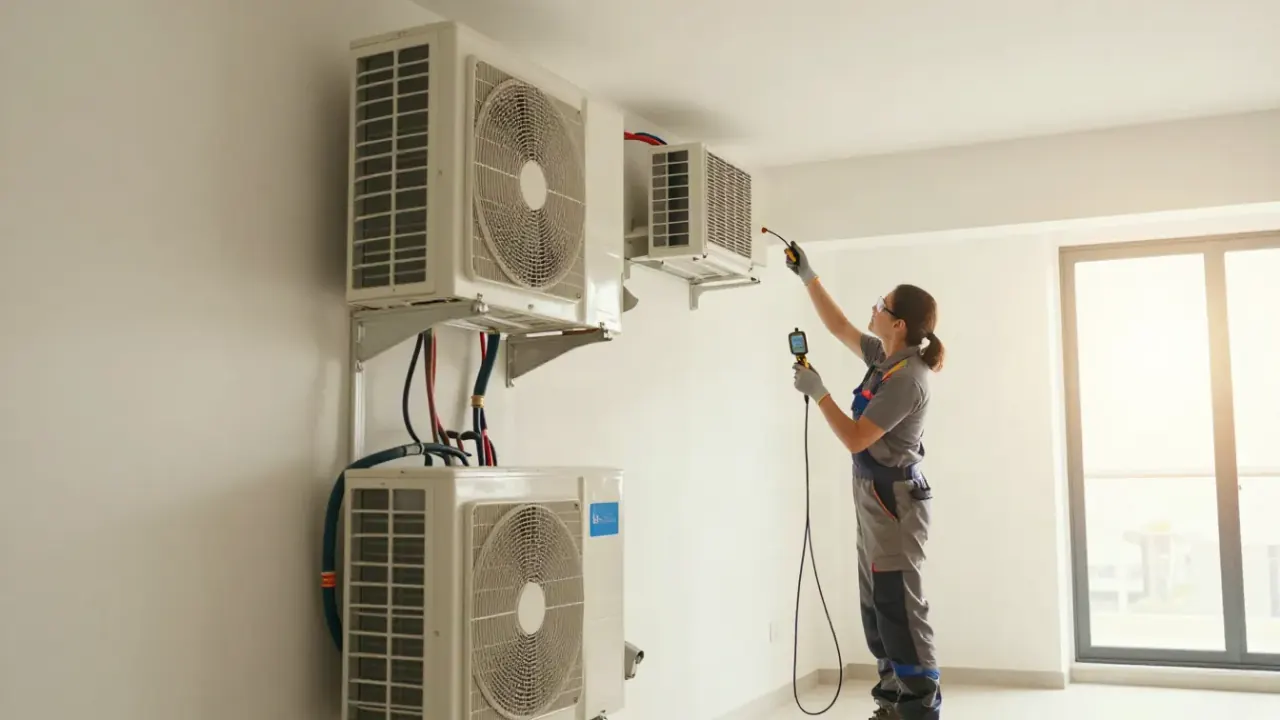
Low refrigerant is the number one reason a mini split stops cooling. We locate the leak with an electronic detector, repair the joint or coil, pressure test with nitrogen, and recharge with R-410A or R-32 to the nameplate weight.
View service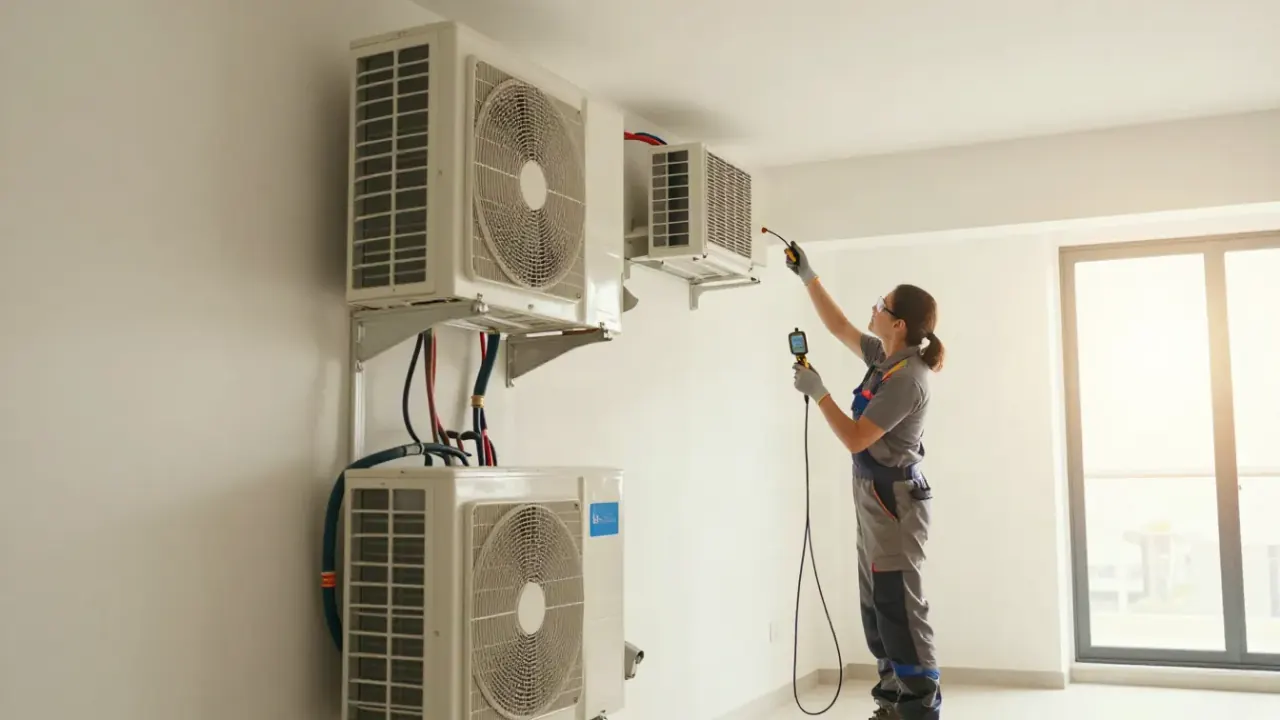
Ice on the indoor coil blocks airflow and shuts down cooling. We thaw the coil, clean it, clear the condensate drain line, and check charge and airflow so the freeze does not come back next week.
View service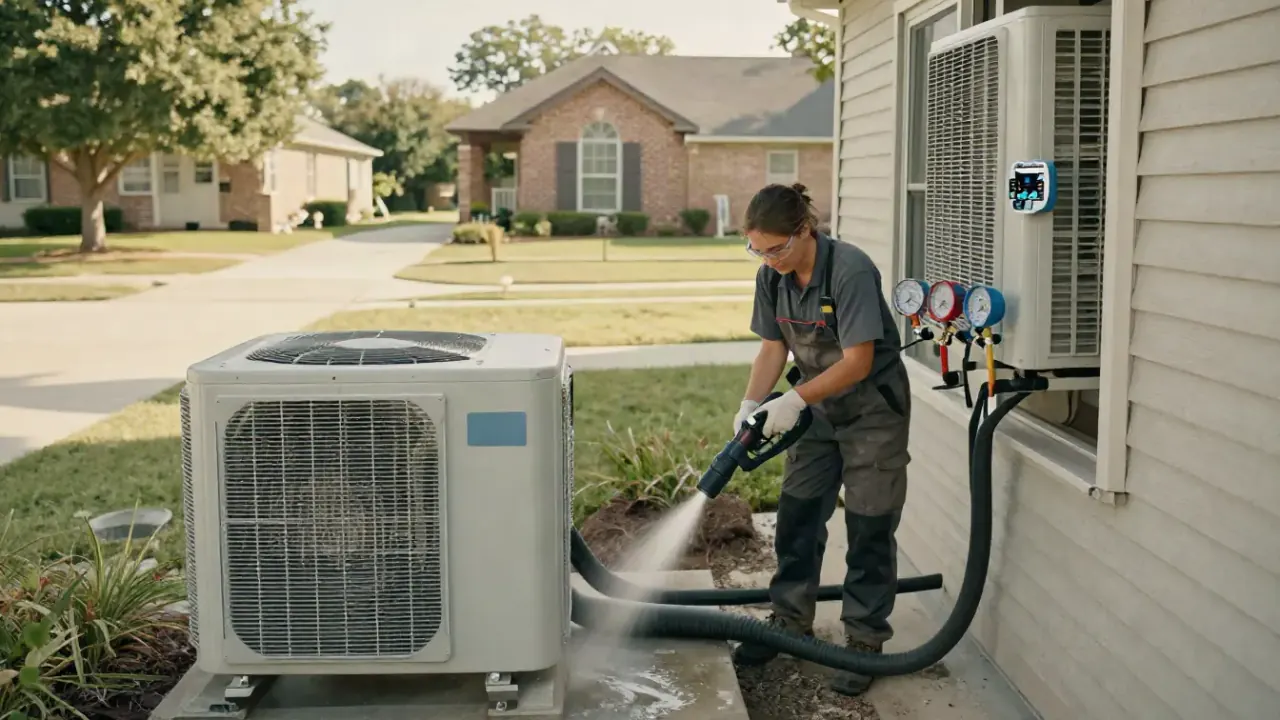
Flashing error codes on the indoor unit or remote point to specific faults, from sensor failures to communication problems. We read the code, test the circuit, and repair the actual component rather than clearing the code and hoping.
View service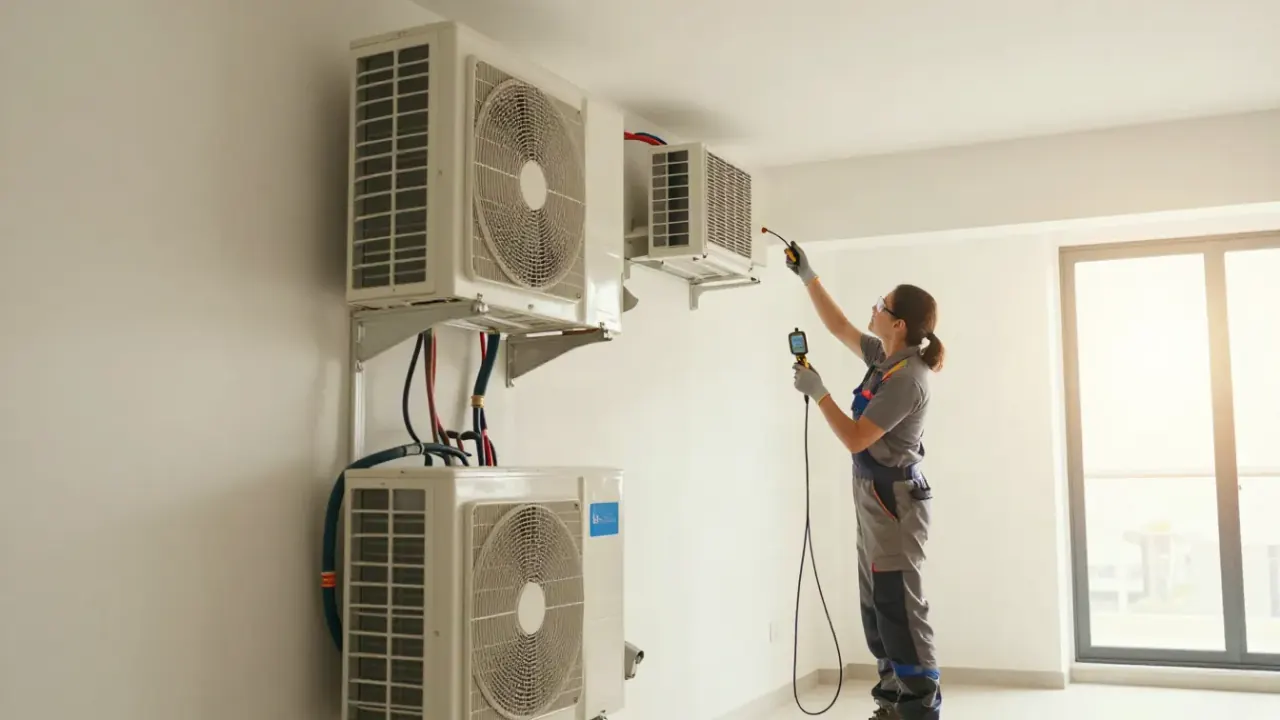
Call (281) 738-1427 or send us a message and we'll get back to you fast. We're open Monday through Friday, 8am to 6pm, and we take emergency calls for no-cool situations. If your unit quit on a weekend, leave a message and we'll call you back first thing.