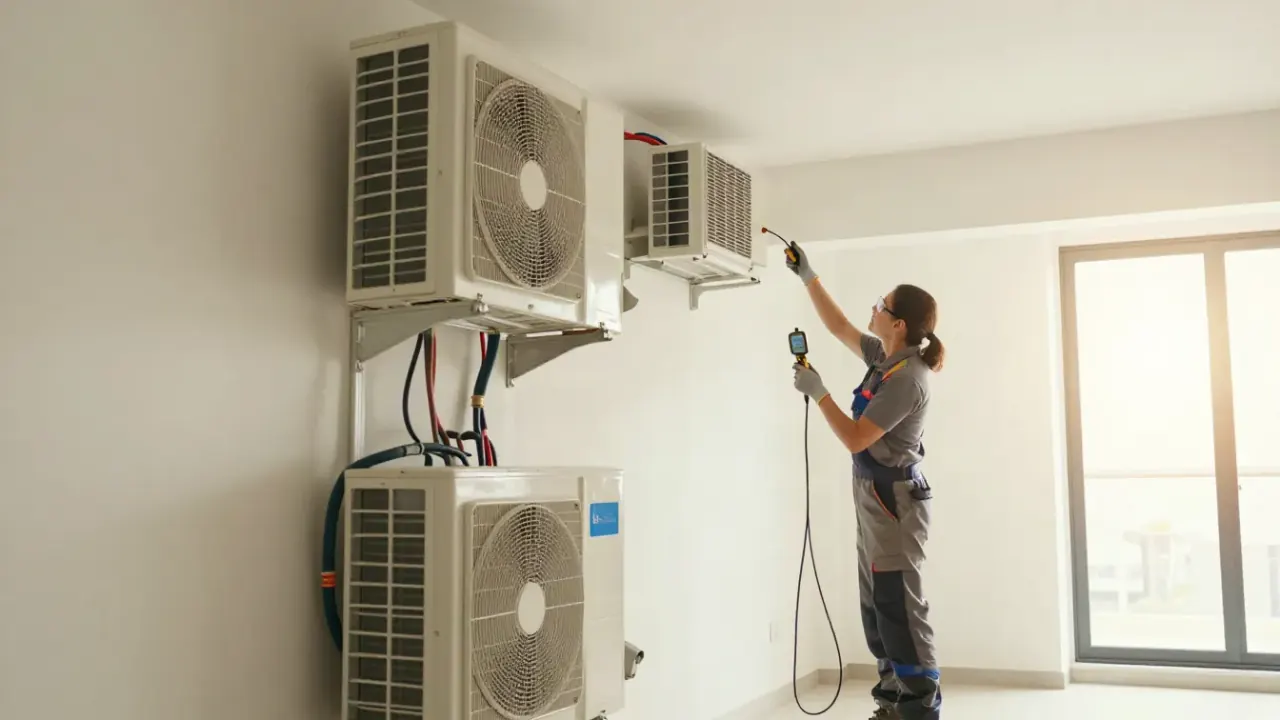
Why Your Mini Split Makes Strange Noises
Rattling, grinding, squealing or hissing from your ductless system usually points to one of six specific failures. Here is what each noise means and what repair costs in Rosenberg.
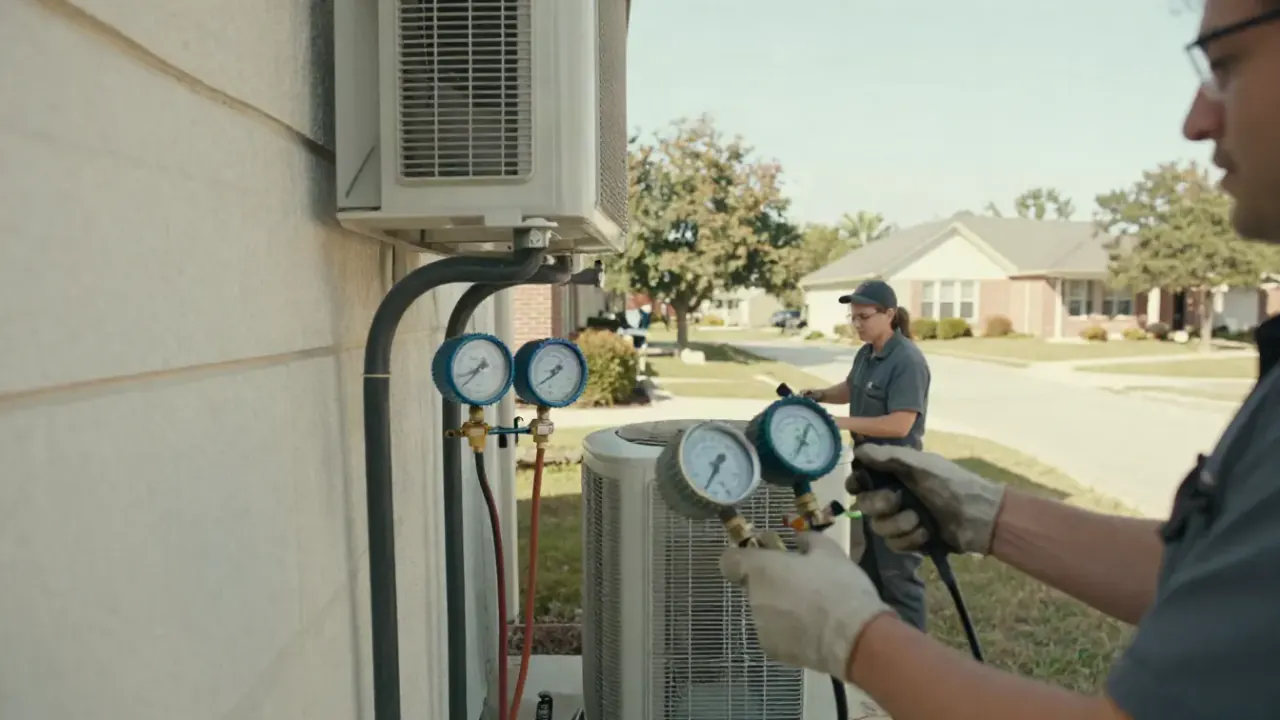
Strange noises from a mini split almost always trace back to one of six causes: a loose fan blade or panel, a failing blower bearing, a refrigerant leak, a clogged condensate drain, a failing compressor, or a control board fault. The noise itself tells you which one you are dealing with. A rattle points to something mechanical that has worked loose; a grind points to a bearing that is running dry; a hiss points to refrigerant escaping under pressure.
We hear these calls every week across Rosenberg, and most homeowners wait too long because the system still cools. Below, we break down each noise, what it means, what a repair costs in 2026, and when it is time to stop guessing and get a technician out.
What Each Mini Split Noise Is Telling You
Why your mini split makes strange noises is really a question about which component is failing, because each sound maps to a specific part. A healthy ductless system runs at roughly 19 to 26 decibels on low - quieter than a refrigerator hum. Anything above that, or anything rhythmic, scraping, or hissing, is a symptom.
Here is the quick decoder we use on service calls:
- Rattling or buzzing - loose panel screws, a cracked fan blade, or a wall bracket that has worked free.
- Grinding or scraping - blower wheel bearings running dry, or debris inside the air handler.
- Squealing or screeching - a worn bearing or a slipping fan motor shaft.
- Hissing or bubbling - refrigerant leaking from a flare fitting or line set.
- Gurgling - a partially blocked condensate drain line.
- Clicking or chattering - a relay, capacitor, or control board on its way out.
If you want the full repair service behind these diagnoses, our Noisy Mini Split Repair Rosenberg TX page covers what we do on each visit.
Why Is My Mini Split Making Strange Noises in Rosenberg TX?
Mini split strange noises in Rosenberg TX come from three local pressures that most generic HVAC articles never mention: our humidity, our clay soil, and our summer heat load. Fort Bend County sits at 75 to 90 percent relative humidity for most of the cooling season, and that moisture does two things to a ductless system.
First, it feeds biological growth on the blower wheel. A blower wheel that has picked up a quarter-inch of biofilm is no longer balanced, and an unbalanced wheel rattles at every speed above low. Second, it keeps the condensate pan full, which means any debris in the drain line turns into a clog fast.
Our soil matters too. Rosenberg sits on expansive clay that swells and shrinks with every wet-dry cycle. Wall brackets and line-set clamps that were tight at installation can loosen within two or three seasons, and that is where a lot of the buzzing and rattling we find actually starts.
Then there is the heat. From June through September, outdoor units here run 14 to 16 hours a day at 95 to 100 degrees ambient. Compressors and fan motors that would last 12 years in a milder climate often show bearing noise by year seven or eight. If your system is in that age range and started grinding this summer, that timeline is not a coincidence.
Rattling and Buzzing: Loose Panels, Fan Blades, and Wall Brackets
Rattling is the most common complaint we get, and it is usually the cheapest to fix. Nine times out of ten it is one of four things: a cover panel screw that has backed out, a fan blade with a hairline crack, a wall bracket that has shifted, or debris - leaves, twigs, a palm frond - sitting against the outdoor fan.
Ductless AC rattling noise in Texas has one more common source that surprises people: the line set. Those copper and insulated lines run through the wall and along the exterior, and if a clamp has loosened, the vibration from the compressor travels down the line and turns the whole wall cavity into a speaker. Homeowners often describe it as "the wall buzzing," not the unit.
Here is what we check on a rattle call, in order:
- All four corner screws and the two center screws on the indoor cover.
- The blower wheel for cracks, missing fins, or biofilm imbalance.
- The outdoor fan blade for chips and the fan motor shaft for play.
- Every line-set clamp and the wall bracket torque.
- The outdoor unit's rubber isolation pads - when they harden, the whole chassis buzzes.
Most rattle repairs land between $95 and $220 in 2026, and we can usually finish them same-day. If the noise is coming from a system that also is not cooling properly, though, the rattle may be a symptom of something bigger - that is when we look at Mini Split Not Cooling Repair Rosenberg TX instead of just tightening screws.
Grinding, Squealing, and Screeching: Bearings and Belts
A mini split grinding noise in Rosenberg, Texas, is the one you should not ignore. Grinding means metal is contacting metal, and in a ductless system that almost always means the blower motor bearing or the outdoor fan motor bearing has lost its lubricant.
Squealing is the earlier stage of the same failure. When a bearing first starts to dry out, it squeals at startup and then quiets down once the shaft warms. Homeowners hear it for two or three weeks, assume it fixed itself, and then it comes back as a grind. By that point the motor shaft has scored and the whole motor assembly needs replacement rather than a bearing service.
Mini split squealing noise repair is time-sensitive for exactly that reason. A bearing service runs $140 to $260. A full blower motor replacement runs $380 to $650, and an outdoor fan motor replacement runs $320 to $580. Waiting turns the first number into the second.
One more grinding source worth knowing: debris in the air handler. We have pulled drywall dust, insect nests, and on one memorable call a small gecko out of blower housings in Rosenberg. Anything that contacts the spinning wheel makes a scrape that sounds exactly like a bad bearing. Our technicians check for debris before they quote a motor.
Hissing, Gurgling, and Bubbling: Refrigerant and Drain Line Sounds
A steady hiss is refrigerant escaping, and it is the one noise on this list that can turn a $300 repair into a $1,800 one. Mini splits hold their charge in a sealed loop, so any hissing you hear is a leak at a flare fitting, a brazed joint, or - less often - a punctured coil.
You will usually notice the hiss first, then a slow loss of cooling over one to three weeks, then ice on the indoor coil. Once the coil ices, the system loses capacity fast and the compressor starts short-cycling. That is the point where a straightforward Refrigerant Leak Repair and Recharge Rosenberg TX visit is still enough to save the system.
Gurgling is a different animal entirely and much less urgent. That sound is air moving through a partially blocked condensate drain line, and it is common in our humidity. Left alone, the drain backs up and water starts dripping down the wall behind the indoor head. A drain line clearing runs $95 to $180, and we clear the line, flush the pan, and confirm flow before we leave.
If you are already seeing water streaks on the wall, that is a Mini Split Water Leak and Condensate Drain Line Repair Rosenberg TX job, not just a noise complaint - the gurgle was the warning.
Clicking, Ticking, and Chattering: Electrical and Control Board Faults
Clicking that happens once at startup and once at shutdown is normal - that is the relay engaging. Clicking that repeats every few seconds while the system runs is a fault, and it usually means a capacitor is failing, a relay is chattering, or the control board is losing communication with the indoor or outdoor unit.
On inverter-driven mini splits, which is nearly every unit sold in the last decade, a failing capacitor or board often throws an error code at the same time. If your remote is showing a code, that code narrows the diagnosis to one or two components before we even open the cover. We run Mini Split Error Code Diagnostics Rosenberg TX on every clicking call for that reason - it saves the homeowner diagnostic time and us guesswork.
Capacitor replacement runs $120 to $240. Control board replacement runs $350 to $700 depending on the brand and whether the board is in the indoor or outdoor unit. Both are same-day repairs on most systems we service.
What to Watch Out For Before You Call Anyone
Most of the damage we see on noisy mini splits was caused by a homeowner doing something reasonable that turned out wrong. These are the four we run into most.
- Spraying lubricant into the blower. WD-40 and similar products attract dust, and the dust turns into a grinding paste that destroys the bearing within weeks.
- Ignoring a hiss because the system still cools. A mini split can lose 30 to 40 percent of its charge before you feel it. By then the compressor is running hot and the repair cost has tripled.
- Running the system with ice on the indoor coil. Ice insulates the coil, the refrigerant never fully evaporates, and liquid refrigerant reaches the compressor. That is how a $250 leak repair becomes a Mini Split Compressor Repair Rosenberg TX at $900 to $1,600.
- Tightening wall brackets without checking the line set. Over-torquing a clamp can crimp the insulation and create a condensation point that drips inside the wall.
One thing that is not a mistake: hearing a soft whoosh or a gentle hum. That is normal airflow and compressor sound. If the noise is rhythmic, metallic, or hissing, it is not normal.
When to Call a Professional
Call us when the noise is metallic, when it repeats, or when it comes with any loss of cooling or heating. Those three signals cover grinding, squealing, hissing, and rapid clicking, and none of them improve on their own.
We handle noisy mini splits across Rosenberg and the surrounding communities every day. Our technicians carry blower motors, capacitors, and flare tools on the truck, so most repairs finish in a single visit. We diagnose the noise, tell you the price before we start, and test the system at full speed before we leave. If your system is in one of the newer neighborhoods on the west side, you can also see what we do specifically for Mini Split Repair in Briarwood Crossing, where we work on a lot of builder-installed ductless systems that are now five to eight years old.
If you are not sure whether the sound is serious, call us and describe it. We can usually tell you over the phone whether it is a same-week issue or a same-day one.
Frequently Asked Questions
Why is my mini split making strange noises in Rosenberg TX?
In Rosenberg, the most common causes are biofilm buildup on the blower wheel from our high humidity, loose wall brackets from clay soil movement, and worn bearings from 14-plus-hour summer run times. Each produces a different sound - rattle, buzz, or grind - which is how we narrow it down.
What causes ductless AC rattling in Texas?
Rattling in Texas ductless systems usually comes from a loose cover screw, a cracked fan blade, or a line-set clamp that has worked free. Our heat and soil movement loosen hardware faster here than in milder climates. Most rattle repairs run $95 to $220.
Is a grinding mini split dangerous in Rosenberg?
A grinding mini split is not an immediate safety hazard, but it is a fast-moving mechanical failure. The bearing that is grinding will seize, and a seized blower motor can overheat the indoor unit. Repair it within a week, not a month.
How much does noisy mini split repair cost in Rosenberg TX?
Typical 2026 pricing in Rosenberg runs $95 to $220 for rattles and drain noises, $140 to $260 for bearing service, $320 to $700 for motor or board replacement, and $300 to $900 for leak repair and recharge. We quote before we start.
Can I just turn the system off and wait?
For a rattle, yes - a few days is fine. For grinding, hissing, or rapid clicking, no. Those three get worse with every hour of runtime, and the repair cost roughly doubles once a secondary component fails.
Get Help with Mini Split Repair in Rosenberg
If your ductless system is rattling, grinding, squealing, or hissing, we can diagnose it and give you a straight price before any work begins. Call Rosenberg Mini Split Repair at (281) 738-1427 and we will get a technician out to your home.